Super Mario Sunshine Runs Natively on the Anbernic RG351P via PortMaster
Developer eldandelion released arkos-sms v0.1.0-rg351p, bringing a native Linux ARM64 port of Super Mario Sunshine to the Anbernic RG351P handheld.
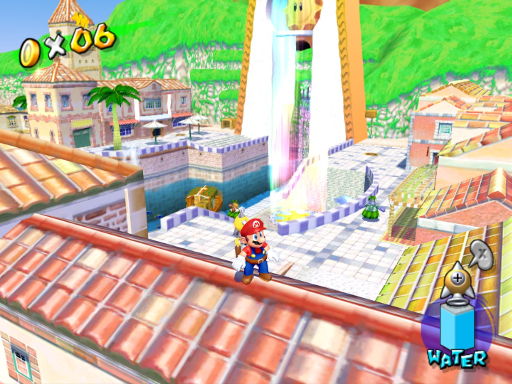
Developer eldandelion has released v0.1.0-rg351p of arkos-sms, a native Linux ARM64 and OpenGL ES 3.1+ port of Super Mario Sunshine packaged for PortMaster on the Anbernic RG351P. Built on top of the chasem-dev/sms-pc-port codebase and the chasem-dev/sms-english matching decompilation, the release gets the GameCube platformer running natively on a Rockchip RK3326 handheld with 1 GB of RAM.
Getting Super Mario Sunshine onto a Cortex-A35 quad-core chip and a Mali-G31 MP2 GPU required aggressive defaults out of the box. The launcher script (Super Mario Sunshine.sh) sets internal resolution scaling to 0.50, enables GL threading (SMS_GX_GL_THREAD=1), disables VSync, MSAA, and texture packs, and trims memory budgets across stream, arena, and display-list caches (SMS_MEM_MB=24, SMS_GX_STREAM_MB=24, SMS_GX_ARENA_MB=16, SMS_GX_DL_CACHE_MB=24). During play, it also locks the CPU (1.296 GHz), DMC (786 MHz), and GPU (520 MHz) governors to performance, restoring them when you exit.
Because the RG351P uses digital shoulder switches instead of the GameCube’s analog triggers, FLUDD’s two-stage spray mechanic is split across the shoulder buttons. R1 maps to a 40% soft press (R_SOFT) for running while spraying, while R2 triggers a full press (R) to stop and aim. Select + R1 and Select + L1 handle quick saves and loads.
Performance varies by scene on ArkOS (wuMMLe). Menus and lighter stages approach 30 FPS, while open areas like Delfino Plaza sit around 16-20 FPS due to single-core CPU display-list processing and OpenGL ES draw-call overhead. Players willing to trade speed for sharper output in lighter levels can raise SMS_GX_SCALE to 0.60 or 0.75 inside the launch script.
How to Try It
No copyrighted assets are included, so you must supply your own North American (GMSE01 Rev 0) dump.
- Download
sms-rg351p-portmaster.zipfrom the arkos-sms releases page and extract it to your handheld’sports/folder. - Convert any
.rvzimage to.isousing Dolphin ornodtool. - Place your
.iso,.gcm, or.cisofile insideports/sms/gamedata/. - Launch Super Mario Sunshine from the Ports section in EmulationStation.
RK3326 devices lack the overhead for GameCube emulation, so getting a decompilation-based native port running on 1 GB of RAM shows how much less overhead native execution carries on low-end hardware.