Stuntman gets an unofficial native Windows port in alpha
Unofficial native Windows port of Stuntman (PS2, 2002) in alpha. You need your own disc, and it runs at the console's 25 fps.
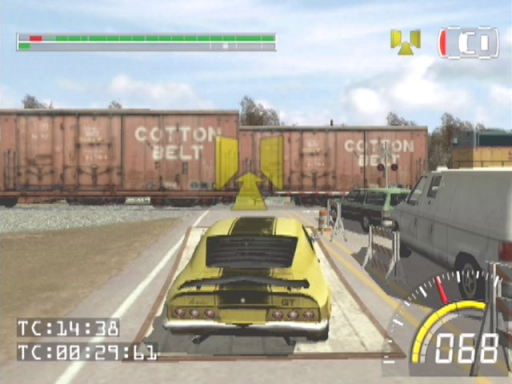
Stuntman, a 2002 PlayStation 2 game, now has an unofficial native Windows port in alpha. The project, stuntman-pc, published v0.1.0-alpha as a prerelease on GitHub. It isn’t an emulator. The game’s PS2 program was translated to C++ and compiled for PC, so it runs directly on Windows, with higher resolutions, widescreen, smoothing and controller support.
You need your own disc. The repo ships no textures, sounds, music or movies. The port reads everything from an ISO image you make from your disc. On first launch it checks that the image is the European release, SLES-50288. The README says nothing about other regions.
The author says the game is playable, with the career and its stunts working and bugs still left. The port runs at 25 frames per second, the console’s speed. The minimum is Windows 10 or 11 64-bit, 4 cores with AVX2 (Intel Core i5-12400 or AMD Ryzen 5 5600), a Vulkan 1.3 card such as an RTX 3060 or RX 6600, and 8 GB of memory. The graphics card entry is an estimate, and the author asks for reports. The recommended setup is an i7-10700K or Ryzen 5 5600X with an RTX 3070 or RX 6700 XT. On the author’s i7-10700K and RTX 3070 it held 25 fps at every resolution from 4 cores up, and about 15 on 2 cores.
How to try it:
- Download the Stuntman-PC-
-windows-x64.zip from the Releases page and unzip it somewhere writable, not Program Files. - Run stuntman.exe and point it at your disc image.
- Alt+Enter switches between window and fullscreen. Settings live in pc_settings.ini beside the executable.
- If something breaks, open an issue with stuntman.log, which the game writes at every start.
Building it yourself needs Visual Studio 2022 with C++, Python 3.10 or newer, and your own disc image. The engine is ps2-port-engine by Daniel Gomes Vieira, under MIT. The README says the project was built with Claude Code, but it doesn’t say how much of the code that tool wrote. The port’s own code is MIT too. The game still belongs to its owners.
