Spider-Man arcade recomp v0.1.1 fixes the Steam Deck truck crash
Native recomp of Sega's 1991 arcade Spider-Man gets a fix for the Steam Deck and Linux opening crash. No ROM included.
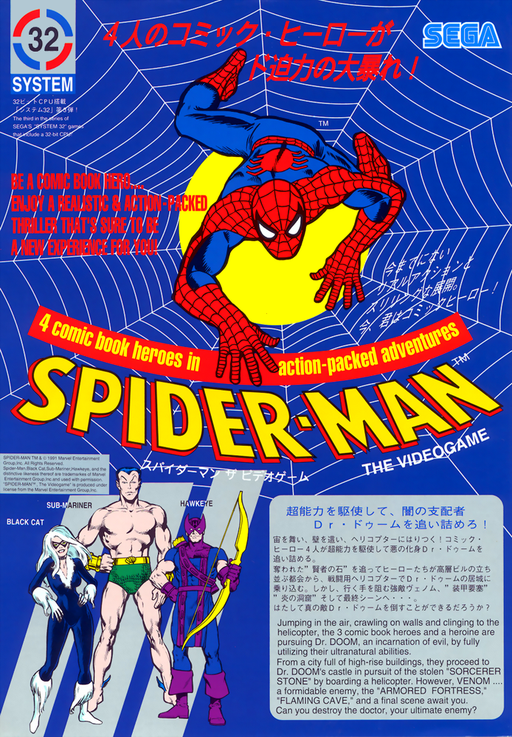
Version 0.1.1 of the Spider-Man: The Videogame native recomp fixes a crash in the opening and truck sequence on Steam Deck and Linux x86-64. The original is Sega’s 1991 arcade game on the System 32 4-player board.
The main program has no V60 interpreter in it. The NEC V60 code is translated to C and compiled to native x86-64, one original instruction at a time. The board (memory, interrupts, video, input, EEPROM) is modelled in C. The release notes list 6,000 opening and gameplay frames that match the MAME reference in state and picture. The project builds on arcade-decomp by Sebastian Toyos (@cheviman).
The crash came from a call at 0x0600FC into a dispatcher, and the dispatcher calls an object handler through a table. The handler at 0x073716 is valid, but the static analysis was never told the tables existed, so no translated function was there. The fix describes those tables in symbols.txt as 32-bit code-pointer records. That translates 0x073716 and six later handlers. The notes say no assertion was suppressed, no return address was hardcoded, and the opening and truck sequence were not bypassed.
Sound is still the exception. The Z80 sound driver runs on MAME’s Z80 core as a documented fallback until the native translation is done. The Windows x64 zip is the older sound-fix build and lacks the truck fix. The Linux and Steam Deck AppImage has it.
How to try it:
- Get your own MAME spidman.zip. The repo ships no ROM, and the game checks the file by CRC32.
- Put spidman.zip beside the AppImage, or set SPIDERMAN_ROM to its path.
- Desktop Mode: make the AppImage executable and double-click it. Gaming Mode: add it as a non-Steam game.
The README still says no physical Steam Deck was available for testing. The release notes list a Steam Deck AppImage run but don’t say whether it ran on real hardware.
This fix came out of the static analysis. The next thing to watch is the native Z80 translation. Until it lands, sound is the only part still running on an emulator.