Marvel vs. Capcom: Clash of Super Heroes gets a native PC beta
A static recomp of the 1998 Capcom arcade fighter is in beta for Windows, Linux and Steam Deck. You still need your own ROM set.
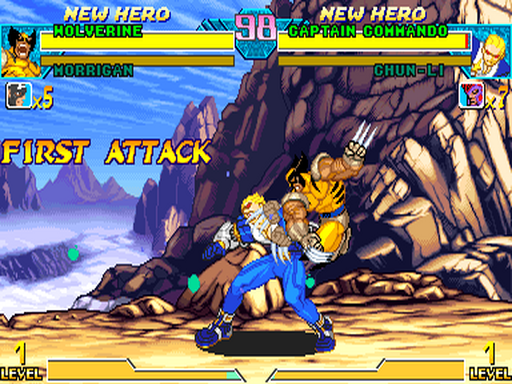
A native PC port of Marvel vs. Capcom: Clash of Super Heroes is out in beta. The first pre-release, v0.1.0-beta.1, landed on October 18. It runs on Windows, Linux and the Steam Deck.
The port is a static recomp. The 1998 arcade game’s code, written for Capcom’s CP System II board, gets translated into C++ ahead of time and runs on a small machine written for it. There’s no emulator involved. The translation is done by cps2recomp, v0.3.0, which handles the board’s 68000 and Z80 programs.
No game data ships with it. You need your own ROM set, MAME’s mvsc (Europe 980123). The launcher checks each file by CRC-32. Clone sets like mvscu or mvscj get refused on purpose, because the translated code and its addresses belong to this revision only.
What works: the launcher, an in-game menu with nine save-state slots, Reset, Insert coin, Player 2 joins, stop, step and slow motion, run-ahead, and remappable controls for each player. What doesn’t: the cheats and training aids that the sibling cps2recomp ports have. They depend on memory addresses found on the running board, tracked in games/mvsc/PROGRESS.md.
The project says its translated code matched the interpreter across 22,816,290 blocks with no differences, and that 63 of the 68000 program’s instructions still run in the interpreter. Those are the author’s own checks. I couldn’t verify them.
How to try it:
- Grab the archive for your system. Windows gets a zip, Linux gets a tar.gz or an AppImage. Check it against
SHA256SUMS.txt. - Linux needs glibc 2.34 or newer, so Ubuntu 22.04 and up, or SteamOS 3.5 and up.
- Unpack and keep the launcher beside the game. Point it at your ROM set, set your controls, and hit Play.
The game is from 1998. The translation method is the interesting part, and the cheats depend on finding addresses one at a time. Watch the PROGRESS notes in the repo to see how fast that goes.