LEGO Star Wars II DS gets a Windows port with online play
lsw2ds-pc v0.3.0 is a static recompilation of the Nintendo DS game for Windows, with online play for up to four players. You need your own ROM.
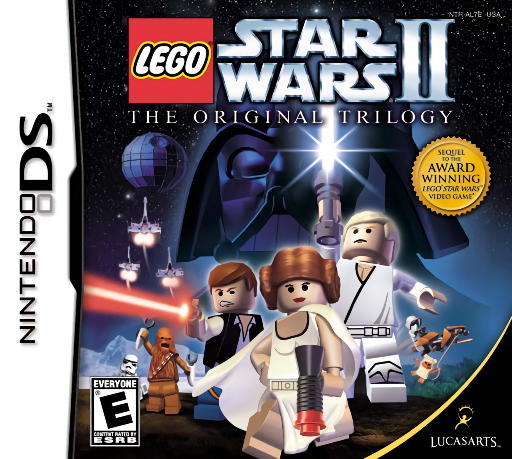
lsw2ds-pc v0.3.0 is a prerelease of a native Windows port of LEGO Star Wars II: The Original Trilogy, the Nintendo DS version. The code is on GitHub under the AgitationSkeleton account. The headline feature is online multiplayer for two to four players, replacing the DS wireless link.
The port uses static recompilation. The ARM9 and ARM7 machine code from the cartridge gets translated to C ahead of time and compiled into a PC program. The original code does not run on a virtual CPU, except for the parts the translator never reached. Those run on a built-in ARM interpreter. The README says about 44,000 functions get translated. The base is ndsrecomp, a DS static recompilation framework.
The repo ships two programs built from one binary. lsw2_bountyhunter.exe is Bounty Hunter, the arena mode as a standalone game, with an online lobby, four-letter room codes and a host settings console. lsw2.exe runs the game as shipped, story and Free Play included, and adds online co-op through the cartridge’s own wireless screens. It keeps its own save.
Hosting needs TCP port 28550 reachable from outside. The game tries UPnP first. The public lobby list runs on a Cloudflare Worker, and the repo includes a self-hostable version of the same protocol.
How to try it:
- Download a release zip and unzip it somewhere you can write to.
- Run
build\lsw2_bountyhunter.exeorbuild\lsw2.exe. - On first start, point it at your ROM. It checks for the USA release (SHA-1
7c1afa070797945ba5a2577c7ddfded5cf2fc443) and copies it intorom\.
The port needs your own cartridge dump. The README does not say how online play holds up over real connections, and this is a prerelease.
My take: the networking is the part to watch. It replaces the DS wireless layer with a lockstep transport over TCP.