Geometry Wars: Retro Evolved 2 PC port v0.5.0 fixes high-FPS game speed
The fan-made static recomp of Geometry Wars: Retro Evolved 2 for PC, v0.5.0, interpolates frames above 60 FPS so game speed stays at 60 Hz.
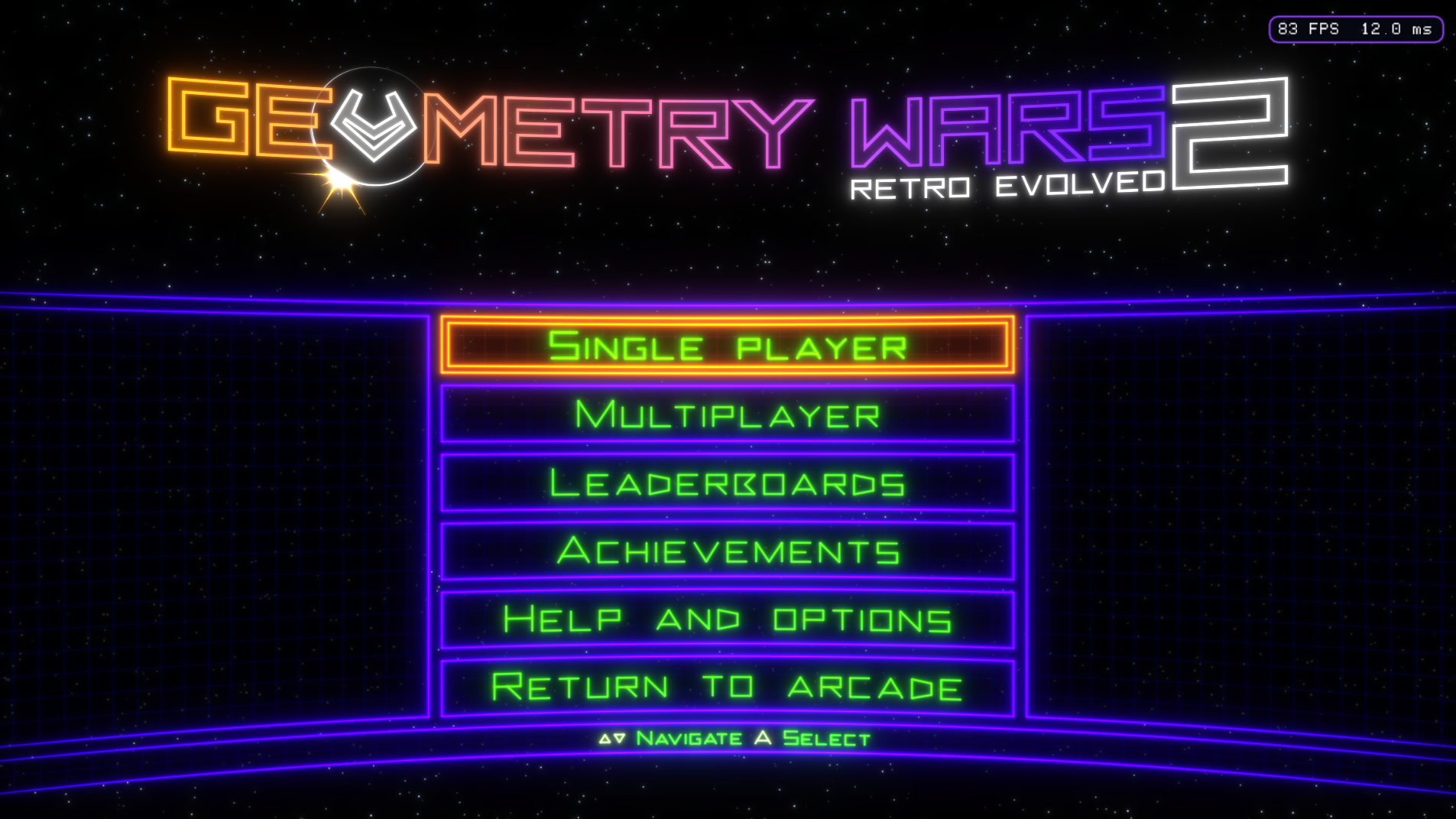
Geometry Wars: Retro Evolved 2, the Xbox Live Arcade shooter for Xbox 360, now has a native PC port built through static recompilation. Version 0.5.0 of the fan-made port was released on October 21, 2026. Its biggest change is that high frame rates no longer speed up the game.
The port turns the Xbox 360 code into native PC code with the ReXGlue SDK. The project ships no game files. You need your own Xbox Live Arcade package, and the TRG launcher installs the game from it.
The main fix is interpolation. The game’s simulation still updates 60 times per second, and above 60 FPS the frames in between are interpolated. The release notes say the v0.4.0 high-FPS timing let enemies and timers speed up with the frame rate. Fixed rates of 90, 120, 144, 165 and 240 FPS turn interpolation on straight away. Unlimited switches it on or off depending on how fast the game renders. Interpolation adds about one 60 Hz update, roughly 17 ms, of visual delay. Particles and trails are not interpolated. The notes tie this to issue #5, where a reporter described the enemy problems, but that reporter has not confirmed the fix yet.
Other changes: the launcher checks GitHub once per start and verifies any update with SHA-256 before replacing files. You can remap keyboard controls, navigate the launcher with a controller, and the cursor hides during play. On Windows, a crash adds a CRASH REPORT block to the session log. Performance work targets the Direct3D 12 renderer on Windows.
How to try it:
- Find your own Geometry Wars: Retro Evolved 2 Xbox Live Arcade package.
- Download v0.5.0 from the project’s GitHub releases page.
- Point the TRG launcher at your package and let it install the game.
- If your monitor runs a high refresh rate, pick a fixed frame rate in the settings.
Limitations: the port is unofficial and not affiliated with the game’s makers or publishers. The Linux and Steam Deck builds are experimental. Achievements and leaderboards work locally, with no Xbox Live connection.
Game logic stays at the original 60 updates, and only drawing is interpolated.