Blazing Star gets a native static recomp, v0.1.0 alpha
Blazing Star, the 1998 Neo Geo shoot 'em up, now runs as native Windows and Linux code. You still need your own ROMs.
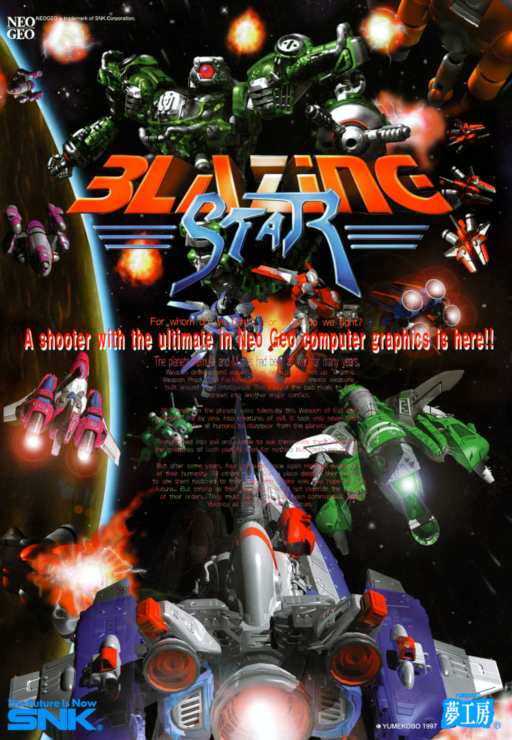
Blazing Star (Yumekobo and SNK, 1998), the shoot ’em up that ran on the Neo Geo MVS arcade board, now runs as a native Windows and Linux program. The v0.1.0 alpha dropped on October 26. It’s a static recomp: the 68000 code gets converted to C by the neogeorecomp v0.2.0 toolkit, then runs as native machine code against a software model of the MVS board. The release calls it a recompilation, not an emulator wrapper.
The project’s main claim is that the output can be checked. The --verify mode reruns every recompiled block in the Musashi 68000 interpreter and compares registers, flags and bus writes. The notes list 1,010,280 blocks with 0 mismatches. A scripted Stage 1 session runs with 0 interpreted instructions and 0 uncovered entry points. Frame output matches the interpreter byte for byte. The notes put it at about 916 fps headless, roughly 15 times real time. The figures come from the release notes. No independent test is cited.
The release lists several limits. The P ROM is 3 MB in two banks. The toolkit recompiles only the fixed bank and the first banked megabyte, so the project patches the runtime to interpret the second bank when it’s selected. The test sessions never reached it. The CI-built AppImage is interpreter-only because CI can’t ship ROMs. For a fully recompiled Linux build, you run scripts/build-appimage.sh locally with your own roms/ folder. The Windows build is unsigned, so SmartScreen may warn on first run. --record gives silent video. The code is under PolyForm Noncommercial 1.0.0, so commercial use needs a separate arrangement.
How to try it:
- Get your own MAME dumps of the
blazstarandneogeosets. Nothing is included in the repo. - Unzip them into a
roms/folder next to the executable. - Run
blazingstar.exe --rom-path roms.
Arrows move, Z X C V map to A B C D, 5 inserts a coin, 1 starts, Esc quits. A gamepad works through SDL2.
The verify step is the most interesting part. A recomp you can check block by block against an interpreter makes the “native” claim testable. It’s still alpha, and the test sessions never reached the second bank.